Home / Destinations / USA
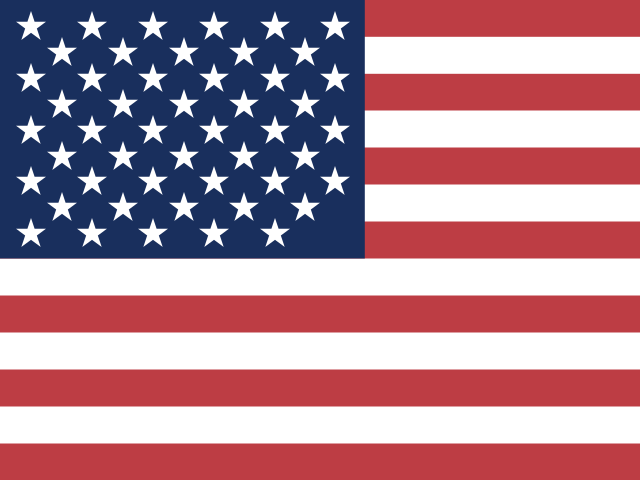 Study in the United States from Bangladesh
Widest choice of universities, strong funding
Talk to a counsellor - freeIn short
Studying in the USA from Bangladesh generally costs US$20,000–US$50,000 a year at public universities and more at private ones, with a Bachelor's taking four years and a Master's one and a half to two. You apply for an F-1 visa after receiving Form I-20, and attend an interview at the US Embassy in Dhaka.
Tuition
US$20,000–US$45,000 per year at public universities; private universities commonly run US$30,000–US$70,000
Living costs
US$10,000–US$20,000 per year, varying sharply by city - Texas and the Midwest sit far below New York or California
Intakes
Fall (August/September, the main one), Spring (January), a smaller Summer intake at some universities
After graduating
OPT - 12 months, extended by a further 24 months for eligible STEM degrees
Why Bangladeshi students choose USA
The USA has more universities than any other destination, which cuts both ways: there is a place for almost every profile and budget, but choosing badly is easy. Funding is the part Bangladeshi students most often underestimate - assistantships and departmental scholarships at Master's and PhD level can cover far more than the headline tuition suggests.
- ›Over 4,000 accredited institutions, so the range of entry requirements and fees is enormous
- ›Graduate assistantships and departmental funding can cover tuition plus a stipend, particularly in STEM
- ›OPT gives 12 months of work after graduation, extended to 36 months for eligible STEM degrees
- ›Course structure lets you change or combine majors well after you have started
Cost of studying in USA
| Tuition | US$20,000–US$45,000 per year at public universities; private universities commonly run US$30,000–US$70,000 |
|---|---|
| Living costs | US$10,000–US$20,000 per year, varying sharply by city - Texas and the Midwest sit far below New York or California |
| Currency | USD ($) |
| Work while studying | 20 hours per week on campus during term, full time during official breaks; off-campus work requires CPT or OPT authorisation |
Figures are indicative and move with exchange rates and policy. Confirm current amounts on US Department of State - Student visas before you budget or transfer funds.
Entry requirements
Academic
HSC or A-Levels for undergraduate; a four-year Bachelor's for most Master's programmes. SAT is optional at many universities now; GRE or GMAT is still asked for by some graduate programmes.
English language
TOEFL iBT 79–100 or IELTS 6.5–7.0 is the usual range. Duolingo and MOI letters are accepted by a growing number of universities but far from all.
No IELTS score yet? There are recognised alternatives - see which ones count, and where they don't.
F-1 student visa: step by step
- 1 Receive your admission offer and Form I-20 from a SEVP-approved university
- 2 Pay the SEVIS I-901 fee and keep the receipt
- 3 Complete the DS-160 online application and pay the visa fee
- 4 Book your interview at the US Embassy in Dhaka
- 5 Attend the interview with your I-20, financial evidence, academic records and passport
Official guidance: US Department of State - Student visas
Hoping to bring your husband or wife with you? Dependant rules differ by country, by course level and by year, so this is worth checking before you apply rather than after. See our spouse & dependant visa support.
Scholarships
- ›Fulbright Foreign Student Program - fully funded Master's and PhD
- ›Graduate assistantships - tuition waiver plus a stipend for teaching or research
- ›University merit scholarships, often awarded automatically on admission
Universities we work with in USA
Frequently asked questions
How much does it cost to study in the USA from Bangladesh?
Public universities typically charge US$20,000–US$45,000 a year in tuition and private ones US$30,000–US$70,000, with living costs adding roughly US$10,000–US$20,000 depending on the city. The spread is wide enough that the university you pick matters more than the country - a public university in Texas and a private one in New York are barely comparable financially.
What is the F-1 visa interview like at the Dhaka embassy?
It is short, usually a few minutes, and the officer is deciding two things: that you are a genuine student and that you can fund the course. Expect questions on why this university, why this course, who is paying, and what you plan to do afterwards. Answer directly and consistently with your documents - rehearsed speeches tend to hurt rather than help.
Can I get a full scholarship to study in the USA?
At Master's and PhD level, yes - graduate assistantships often cover tuition and pay a stipend, and Fulbright funds a small number of Bangladeshi students each year. Full funding at undergraduate level is much rarer and highly competitive. Partial merit scholarships are far more common and worth applying for widely.
Can I work while studying in the USA?
On-campus work is allowed up to 20 hours a week during term and full time during breaks. Off-campus work needs authorisation through CPT or OPT and is tied to your field of study. Working without authorisation puts your visa status at risk, so it is not worth improvising.
How long can I stay after graduating?
OPT gives you 12 months of work authorisation in your field. If your degree is on the STEM designated list, you can apply for a 24-month extension, taking the total to three years - which is usually enough time to find an employer willing to sponsor an H-1B.